


bald eagle riding thermals above the ranch
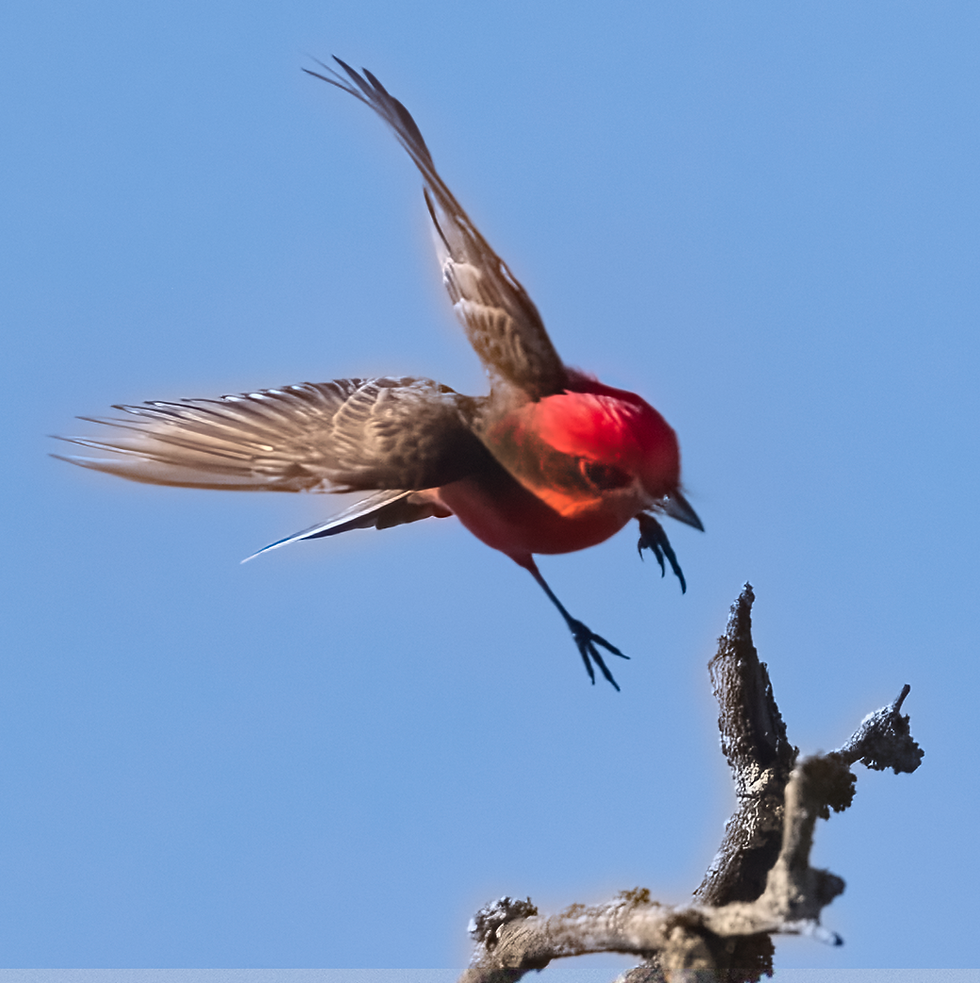
Since moving to the ranch in 2014, we have observed over 100 species of birds. Many, such as the vermillion flycatchers, painted buntings, and cedar waxwings, were birds I'd never heard of. With Edwards Plateau running along our eastern boundary inside the Central Flyway and the river forming its western boundary, the ranch appeals not only to year-round and seasonal residents but also to migratory birds seeking a stopover. Whether you take birding seriously or just enjoy noticing what’s overhead, the ranch offers unexpected rewards.
I. BIRDS THAT MAKE US SAY "WOW!"
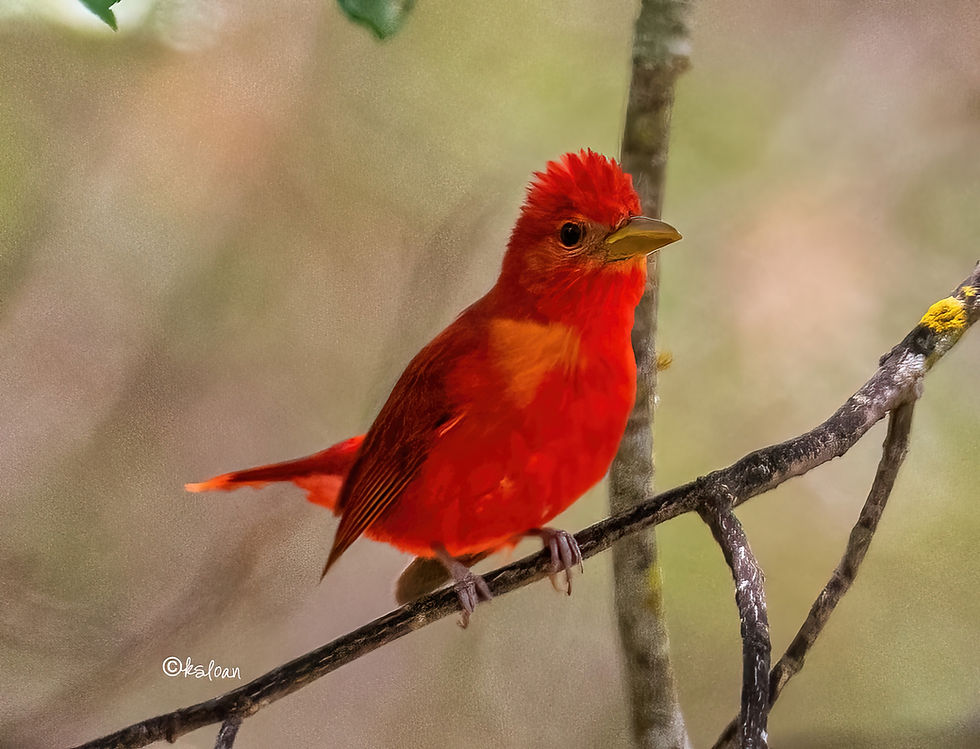
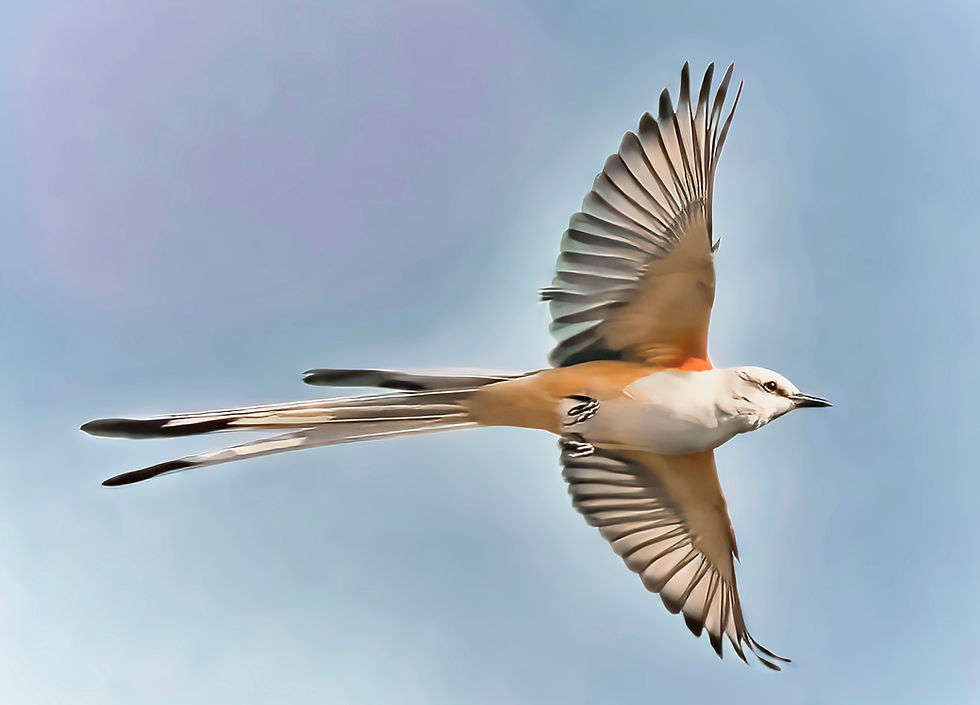
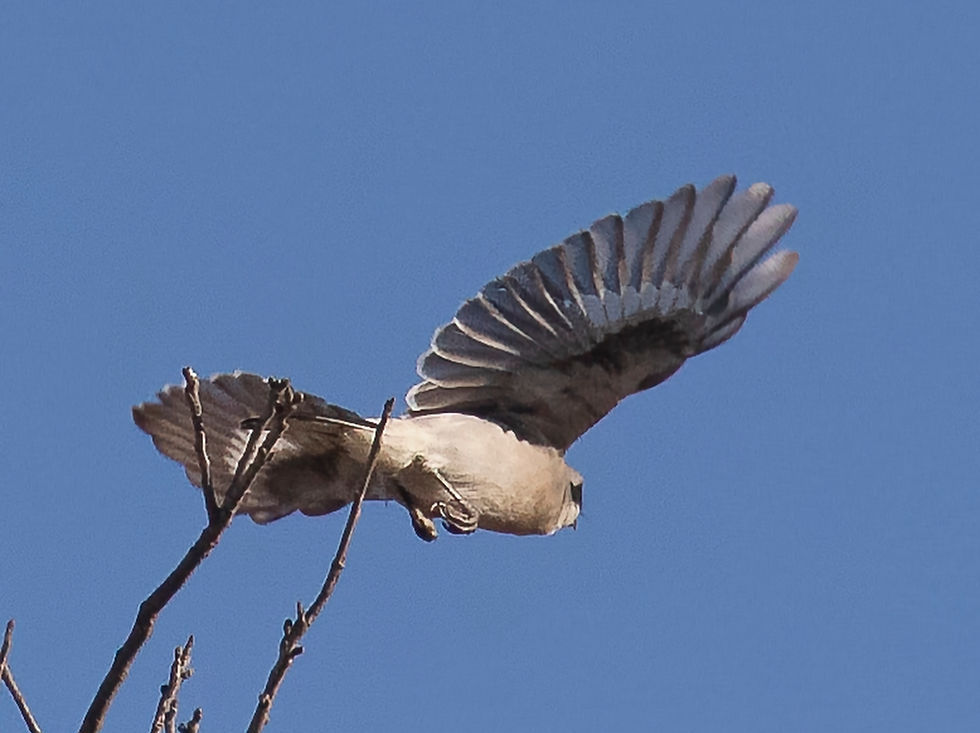
When we first moved to the ranch twelve years ago, we expected to be captivated by the sweeping vistas and large mammals. What we didn’t expect was a world of breathtaking, small-scale wonders hiding right in the branches. Even if you aren’t a traditional birdwatcher, these local show-stoppers are absolute headliners. From birds that look like floating neon embers to acrobats performing mid-air loops over the pastures, these vibrant characters are the true crown jewels of our Texas landscape. Keep your eyes open during your stay—you might just discover your new favorite ranch memory.
A. THE COLOR EXPLOSIONS



B. THE SKY DIVERS

THE YARD CREW--OUTSIDE OUR WINDOW


eye
BEWICK'S WREN. Year-round resident. This extraordinarily brave little bird seems to consider our porch its own. I often watch one scamper past one set of French doors and then another, searching every corner and crevice for something edible. Small enough to disappear into the shrubbery in an instant, it announces its presence with a surprisingly big voice—and very little concern about sharing its territory with us.

FEMALE BLACK-CHINNED HUMMINGBIRD. Spring-summer resident. Always a lively and mesmerizing presence on the ranch, these high-energy acrobats are easily recognized by their metallic green backs and needle-like bills. They can fly backward, upside down, and hover perfectly in place mid-air to sip nectar from native blooms or catch tiny gnats. The females are meticulous architects, using sticky spiderwebs and plant down to construct tiny, golf-ball-sized nests hidden right in our yard's branches.

RUFOUS HUMMINGBIRD . SUMMER VISITOR. Always a rare and thrilling presence on the ranch, these fiery little daredevils are easily recognized by their brilliant, glowing cinnamon-orange plumage. They make a grand appearance in our yards only once every few years as they navigate one of the longest migratory journeys of any bird their size. I caught his tiny "ballerina" performing outside my living room window.

CAROLINA CHICKADEE. Tiny, energetic, and endlessly entertaining, Carolina Chickadees supplement their diet of insects with black-oil sunflower seeds from our feeders. They grab a single seed and fly to a nearby mesquite branch, pin it beneath their feet, then hammer away with astonishing determination until the shell finally gives up its tiny kernel. I never tire of watching how much energy this little bird is willing to expend for such a very small reward.

BLACK-CRESTED TITMOUSE. Year-round resident. The Black-crested Titmouse is often the first bird to announce that a feeder has gone empty. Standing at my kitchen window, I can hear them scolding before I even look outside. Acrobatic and wonderfully expressive, they hang upside down from branches while foraging—and apparently consider keeping the feeders stocked part of my job.

AMERICAN GOLDFINCH. Winter visitor. They begin arriving around November almost incognito, their brilliant breeding colors replaced by subdued olive and buff winter plumage. Then, as the season begins to turn, so do they. One day you glance out the window and catch an unmistakable flash of electric yellow—a male beginning to trade his winter camouflage for the dazzling plumage of spring.

MALE AND FEMALE NORTHERN CARDINAL. Year-round resident. Among our most familiar ranch neighbors, cardinals are a constant presence around the house and feeders. The brilliant crimson male may get the attention, but the female is equally beautiful in warm fawn with coral-red accents. In winter, we sometimes look across the front lawn to find upwards of twenty cardinals gathered together, filling the yard with their clear, metallic whistles.

EASTERN PHOEBE. Year-round resident. Eastern Phoebes have made the eaves of our veranda one of their favorite nesting places, often raising two broods in a single year. Their characteristic tail-wagging makes them easy to recognize as they perch nearby, watching for insects before darting out to snatch one in midair.
RED-BREASTED NUTHATCH. The red-breasted nuthatch is an exciting, unexpected winter visitor to the Texas Hill Country, appearing at backyard feeders only during "irruption" years when northern conifer seeds are scarce. I've seen one only once in the 12 years we've lived on the ranch.

All photographs taken on the ranch by the owners.
The ranch encompasses several distinct habitats, each supporting a characteristic mix of bird species. The birds shown below illustrate some of the species most closely associated with these environments.
SECTIONS:
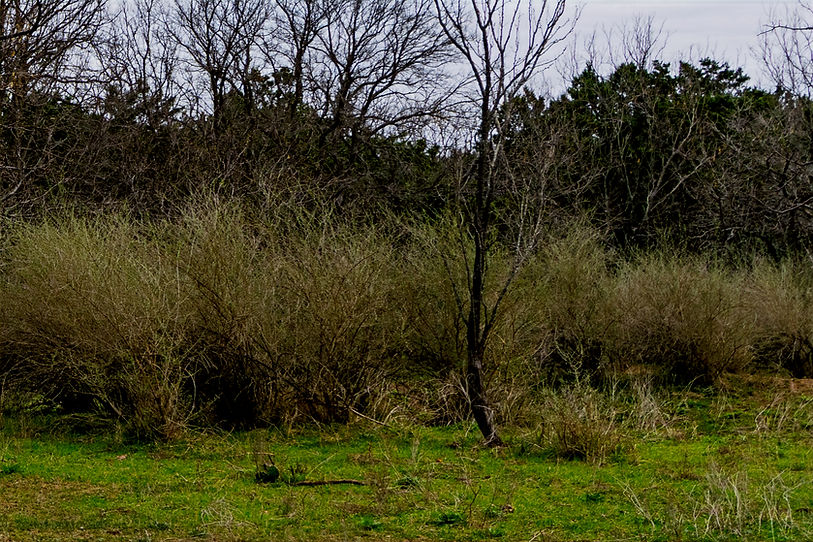
Brushy Thicket
Dense thickets of native shrubs, vines, and young trees create excellent shelter for small birds. These areas are especially productive during migration, when insect-feeding species concentrate in the cover. Listen for Bell’s Vireo, Carolina Wren, and Bewick’s Wren, and watch for White-eyed Vireo and Painted Bunting during the breeding season. In fall and spring migration, mixed flocks of warblers and flycatchers frequently move through these thickets.


Open Meadows & Grassland
The ranch’s open fields and native grasses support birds that prefer unobstructed landscapes. Western Meadowlarks, Killdeer, and various sparrows are common here, while Scissor-tailed Flycatchers often patrol above the grasslands during warmer months. Raptors frequently hunt these areas; watch for Red-tailed Hawks, American Kestrels, and Mississippi Kites soaring overhead or perched in nearby trees.


Woodland & Savanna
The ranch’s woodland–savanna habitat is dominated by scattered live oaks, pecans, and native hardwoods with an open grassy understory. This structure supports a diverse bird community, from canopy species like Golden-fronted Woodpecker and Summer Tanager to understory birds such as Carolina Wren and Blue-gray Gnatcatcher. During migration, mixed flocks of warblers, vireos, and flycatchers frequently move through the trees.


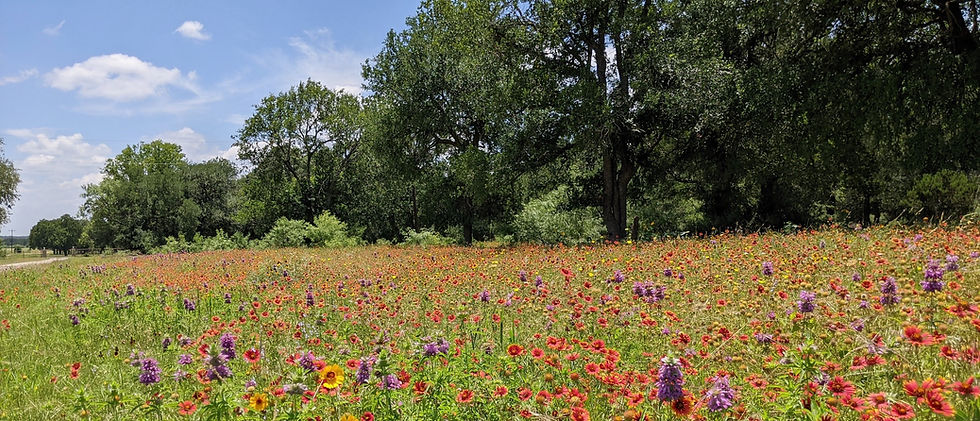
This photo, taken just inside the lower river gate on Red Bluff Guest Ranch, illustrates why tourists drive hundreds of miles for an afternoon of hill country wildflowers.
Edge Habitat (Woodland Edges & Riparian Zones)
The lush ribbon of water carving through the ranch fuels a highly productive riparian ecosystem. The combination of flowing water, dense reeds, and mature riverside trees like pecans and cottonwoods creates a vital sanctuary for specialized species. Watch the shallow banks for patient hunters like Green Herons and White Egrets stalking fish, or look high into the canopy to spot brilliant Baltimore Orioles nesting in the tall branches. During the spring and summer, the humid understory comes alive with the distinctive calls of Yellow-billed Cuckoos and nesting Yellow Warblers.


Riparian Corridor
The western boundary of Red Bluff Guest Ranch is shaped by a half-mile of the historic Colorado River. This lush, shaded ribbon of life acts as a vital oasis in the Hill Country. Massive canopy trees, low overhanging branches, and dense riverside thickets host a highly specialized cast of characters. From kayakers watching herons fish the shallows to hikers catching a flash of a soaring eagle, the river corridor is where raw nature truly comes alive.


Adventure on Us! 🛶 Forget renting gear or hauling your own heavy boats. When you book a stay at Red Bluff Guest Ranch, you get free access to our stable, premium Wilderness Systems Tarpon kayaks. Explore along our private Colorado Riverbanks, spot nesting bald eagles along the high canopy, or cast a line into our quiet fishing eddies. Nature by day, comfort by night—all included in your stay.
HOME ON THE RANGE
Fledglings, Juveniles, & Subadults
For many migratory and resident species, the Texas Hill Country is more than temporary habitat—it is breeding, nesting, hatching, and brooding territory. Because Red Bluff Guest Ranch is managed as a wildlife preserve, we leave much of the landscape naturalistic. Dead trees remain standing, thickets grow dense, and fallen branches decompose naturally. What might look untended to a casual observer provides nesting sites, shelter, abundant insects, and protection for young birds.
The fledglings, juveniles, and subadults photographed here offer an intimate glimpse into that next generation—from miniature Blue-gray Gnatcatcher and Eastern Phoebe fledglings newly out of their nests, to awkwardly charming Painted Buntings and mottled, transition-stage Summer Tanagers gradually taking on their vivid adult plumage. Look closely at these gallery images for fluffy feathers, short tails, bright yellow gape markings (the inner edge of the beak), and some wonderfully endearing first attempts at independence.
While sorting photos for the website, we were delighted to discover so many images of young birds, assuring us the ranch provides a broad spectrum of critical resources that successfully support these species through their most vulnerable reproductive stages. Ultimately, this flourishing avian nursery is living proof of the ranch's rich biodiversity and our deep commitment to preserving a sanctuary where the next generation can thrive.


GREEN HERON. Summer resident. Look closely—there really is a Green Heron in this photograph. Along the wooded banks of the Colorado River, its mottled brown, gray and chestnut plumage can nearly disappear among tangled branches and dappled foliage. This small, secretive heron often hunts quietly from low branches along the water's edge, waiting for fish, frogs and other prey to come within reach.
Sometimes the best way to spot one is to wait for the branches to move.
NOTE CONCERNING THIS BIRD GALLERY:
Birding is a lifelong education. Every photograph in this gallery was taken by me here at Red Bluff Guest Ranch. I'm an enthusiastic amateur birder, and although I have worked carefully to identify each entry, a few—particularly juveniles—remain informed judgments. If you notice an identification that could be improved, I'd sincerely appreciate hearing from you. We all learn from one another.